
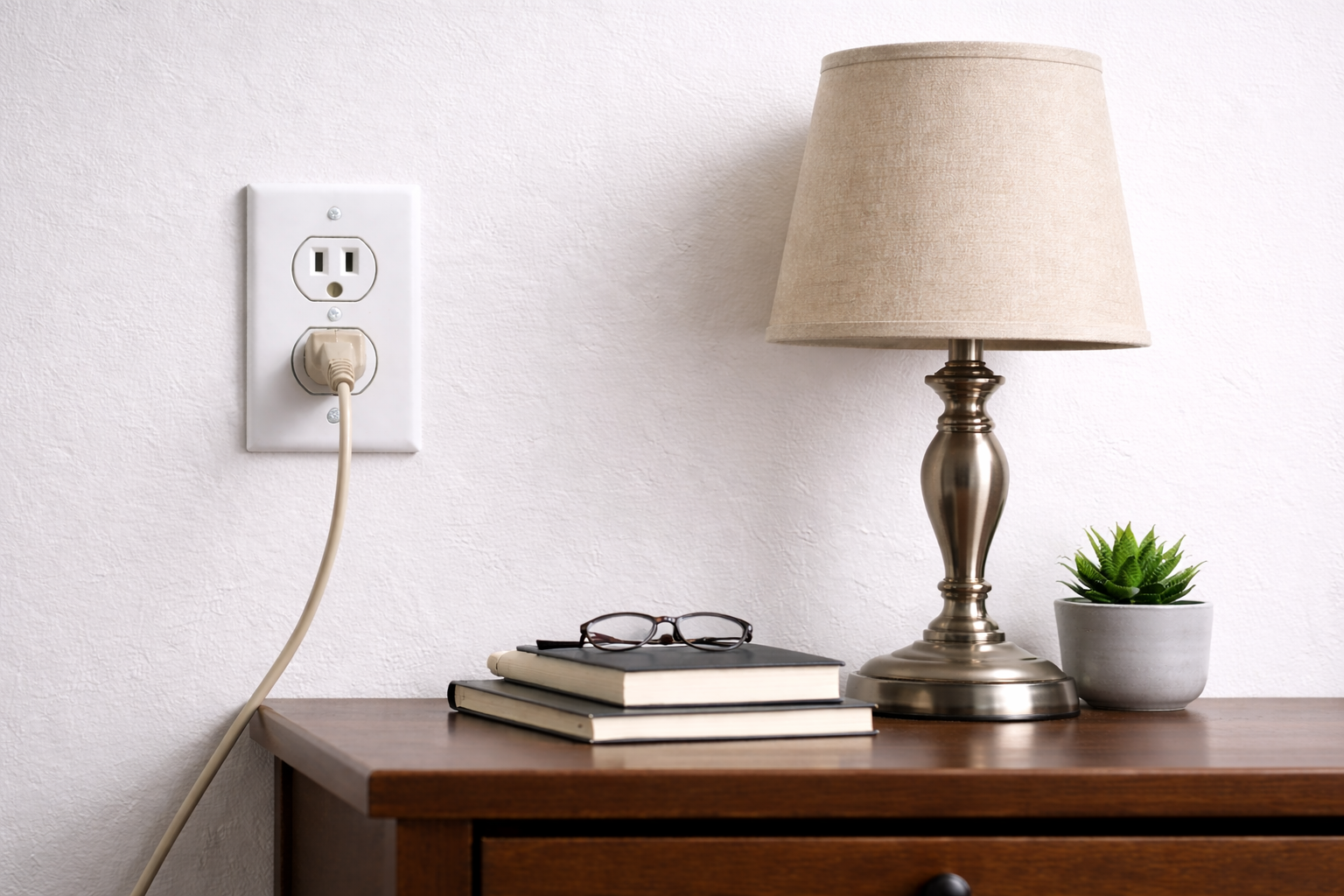
If an electrical outlet suddenly stops working but the breaker is still on, it can be confusing—and a little alarming. The good news is that in most cases, this problem is common, fixable, and not an emergency.
This guide walks you through exactly what to check, in the correct order, so you don’t waste time—or accidentally make things worse.
Read This First: Safety & Scope
Before troubleshooting, set clear boundaries.
What you can safely do
- Press reset buttons
- Flip wall switches
- Test outlets with a plug-in device
- Visually inspect outlets and nearby rooms
What you should NOT do
- Open the breaker panel beyond flipping breakers
- Touch exposed wires
- Remove outlet covers unless power is confirmed off
- Guess at wiring issues
⚠️ Stop immediately and call an electrician if you smell burning, see scorch marks, hear buzzing, or feel heat from the outlet.
Start Here: The 60-Second Triage Checklist
Before assuming anything is broken, check these in order:
- Reset all nearby GFCI outlets (One GFCI can control multiple rooms)
- Check whether other outlets in the room work
- Flip every nearby wall switch
- Test both the top and bottom of the outlet
👉 If the outlet comes back on at any step, stop—that was the cause.
Step 1: Check for a Tripped GFCI (Most Common Cause)

Even if the dead outlet itself is not a GFCI, it may be protected by one located elsewhere, especially if it is located in common GFCI locations listed below.
Common GFCI locations
- Bathrooms
- Kitchen (especially near sinks)
- Garage
- Laundry room
- Outdoor outlets
What to do
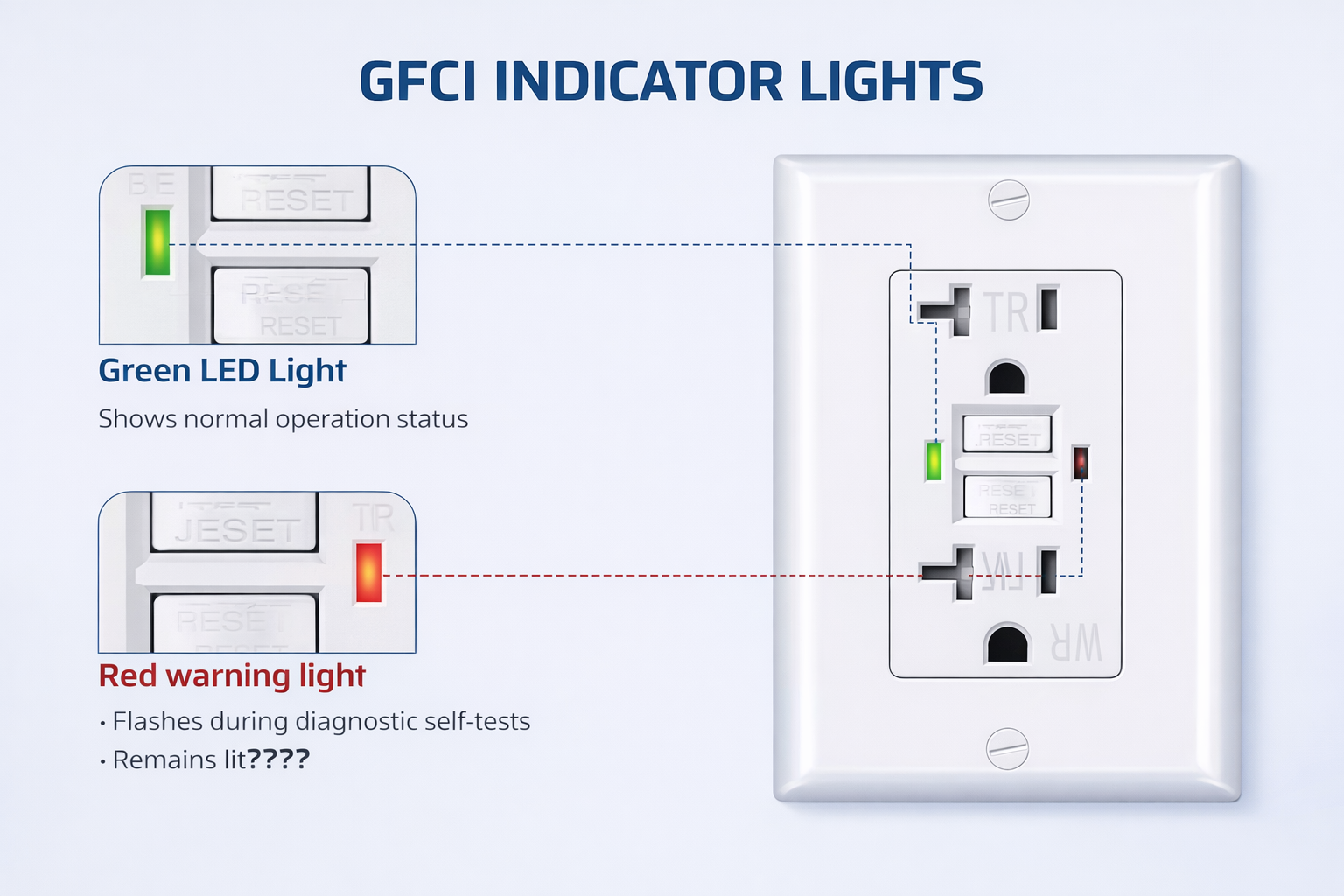
- Locate any outlet with TEST / RESET buttons
- Press RESET
- Recheck the dead outlet
If this fixed the problem, nothing is wrong with your wiring—this is normal behavior.
Step 2: Check for a Switched (Half-Hot) Outlet

Some outlets are designed so that one half is controlled by a wall switch. In many homes, the switched outlet receptacle is installed upside down t a standard always-on outlet, making it easier to recognize at a glance.
However, this convention is not always followed, especially in older homes or during renovations. To determine whether an outlet is switched, look for the following signs.
Signs this is the case
- One plug works, the other doesn’t
- Lamps turn on/off with a wall switch
- Common in living rooms and bedrooms
What this means
The outlet isn’t broken—it’s working as designed.
Step 3: The Outlet Itself May Have Failed
If you determine that the outlet is controlled by a GFCI or a wall switch, the issue is likely already resolved. Next, we’ll look at true outlet failures—what causes them and how to fix them properly.
A few basic tools can help confirm whether the outlet itself has failed. A plug-in outlet tester or a non-contact voltage tester is especially useful for quickly checking power and basic wiring issues. For more precise diagnosis, a multimetercan measure voltage directly at the outlet terminals to verify whether power is actually reaching the device. These tools are inexpensive, beginner-friendly, and can help you avoid unnecessary outlet replacements.
First, outlets could wear out over time, especially older ones.
Signs of outlet failure
- Plugs feel loose
- Outlet worked intermittently before failing
- No power after GFCI reset and switch checks
- Visible discoloration or cracks
Replacing an outlet is often:
- $2–$5 in parts
- 10–15 minutes
- A permanent fix
Always turn power off at the breaker before replacing an outlet.
Step 4: Loose Connection in a Nearby Outlet (Very Common)
Outlets are usually wired in a daisy chain. A loose connection in one outlet can kill power to others downstream.
What to check (DIY-safe)
- Adjacent outlets on the same wall
- Other outlets in the same room
- Any outlet that feels loose or recently worked on
Often, the problem outlet isn’t the one that looks dead.
Step 5: When Multiple Outlets Are Dead
If several outlets are out but the breaker is on, common causes include:
- A loose upstream connection
- A failed outlet feeding others
- A tripped GFCI in another room
Work outward from the last working outlet toward the dead ones.
Red Flags: Stop DIY and Call an Electrician
Do not continue troubleshooting if you notice:
- Multiple rooms affected
- Lights dimming or flickering
- Outlet feels warm
- Breaker trips repeatedly
- Tester shows inconsistent readings
These point to:
- Neutral wire problems
- Hidden junction issues
- Breaker failure
These are not DIY-safe.
Quick Diagnosis Table
| Symptom | Most Likely Cause | DIY-Safe |
| One outlet dead, others fine | Outlet failure | ✅ |
| Several outlets dead | Loose upstream connection | ⚠️ |
| Bathroom / garage outlet dead | Tripped GFCI | ✅ |
| One plug works, one doesn’t | Switched outlet | ✅ |
| Heat, buzzing, flickering | Wiring issue | ❌ |
What This Usually Costs
- Replace standard outlet: $2–$5
- Replace GFCI outlet: $15–$25
- Electrician service call: $100–$200 (depending on your city)
- Wiring repair: varies by scope
Knowing this upfront helps avoid panic decisions.
All the above issues are common, fixable, and usually not urgent—as long as no red flags are present. If red flagged symptoms are observed, turn-off the breaker and call a professional electrician to diagnose the issue.





Leave a Reply