
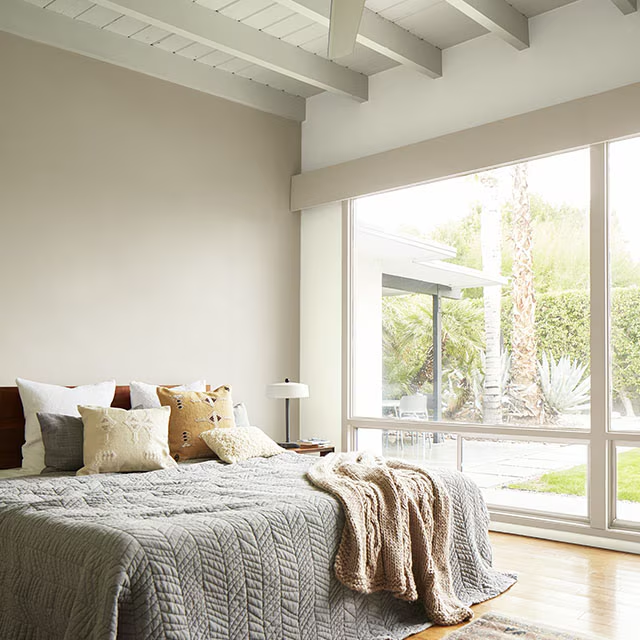
Choosing paint color seems simple—until you’re standing in front of 300 swatches wondering why they all look the same. Paint is one of the most powerful design decisions in a home: it affects light, mood, scale, and how every other material looks.
This guide breaks the process down into clear, practical steps, so you can choose confidently—and avoid costly repainting.
1. Start With the Room’s Purpose and Mood
Before looking at color names, decide how the room should feel.
- Bedroom: calm, soft, restful
- Living room: warm, welcoming, balanced
- Kitchen: fresh, clean, energized
- Office: focused, grounded, low distraction
A helpful rule:
Mood first → color family second → exact shade last

2. Understand Your Lighting (This Matters More Than You Think)
Paint color never exists on its own—light defines it.
Natural light
- North-facing rooms: cooler, muted → need warmer paint
- South-facing rooms: bright, warm → tolerate cooler colors
- East-facing: bright morning, soft afternoon
- West-facing: warm afternoon, darker mornings
Artificial light
- Warm bulbs → yellow/cream undertones show more
- Cool LEDs → blue/gray undertones become stronger
Always evaluate paint both daytime and nighttime.

3. Identify Fixed Elements First (Floors, Cabinets, Stone)
Paint should support what you already have—not fight it.
Look at:
- Wood floors (warm oak vs cool walnut)
- Cabinets
- Tile or stone
- Large furniture pieces
Undertone rule of thumb:
- Warm wood → warm neutrals (cream, beige, warm greige)
- Cool materials → cooler neutrals (soft gray, sage, blue-gray)

4. Narrow to a Color Family (Not a Single Color Yet)
Instead of picking one paint immediately:
- Choose one color family (e.g., warm off-white, light greige, soft green)
- Select 3–5 close shades within that family
This prevents “swatch shock” and keeps decisions controlled.

5. Test Paint the Right Way (Most People Do This Wrong)
Never rely on tiny swatches.
Best practice:
- Paint large samples (at least 12×12 inches)
- Test on multiple walls
- View next to trim, floors, and furniture
- Live with it for 2–3 days
Avoid painting directly on the wall if possible—use sample boards you can move.

6. Choose the Right Finish (It Affects Color)
Finish changes how color reads:
- Flat / Matte: soft, hides imperfections, least reflective
- Eggshell: subtle sheen, most popular for walls
- Satin: more durable, slightly reflective
- Semi-gloss / Gloss: trim, doors, cabinets
Higher sheen = color looks slightly darker and more saturated.

7. Review the Whole Space Before Committing
Before finalizing, ask:
- Does the color still work at night?
- Does it support the room’s function?
- Does it connect well with adjacent rooms?
If the answer is “yes” across lighting and context—you’ve chosen correctly.
As a final remark: A good paint color doesn’t shout. It supports light, materials, and daily life quietly and consistently.
In this article, we discussed paint choices for designed painting projects. Often times, the project is just a wall paint repair. For that, please refer to this article: How to Repair Textured Walls So the Patch Disappears.






Leave a Reply