
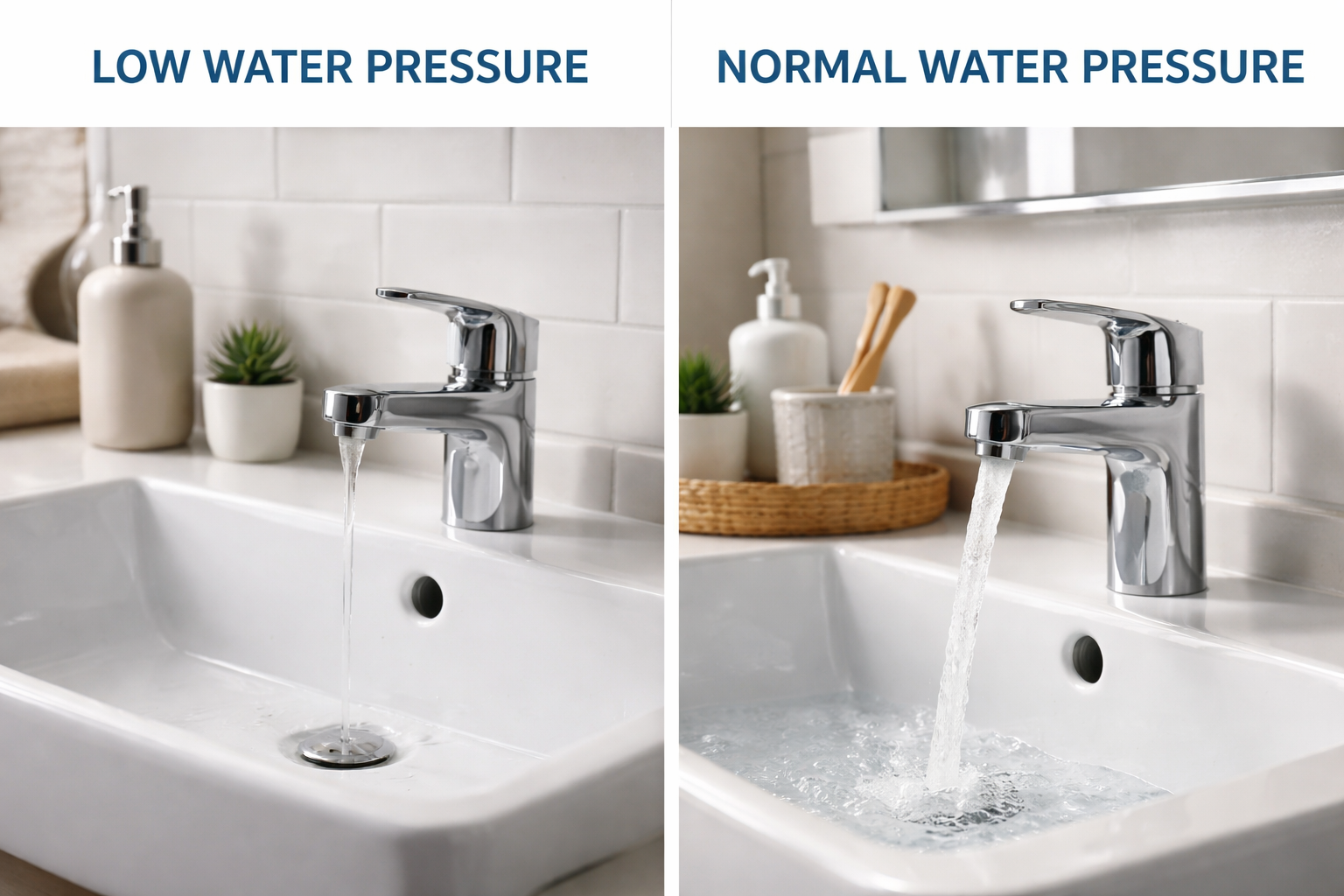
Low water pressure in just one bathroom—while the rest of the house works fine—is a common and frustrating plumbing issue. The good news is that this type of problem is usually localized, which makes it easier to diagnose and often cheaper to fix.
This guide walks through how water pressure works, the most common causes ranked by likelihood, and a step-by-step troubleshooting checklist so you can identify the issue before calling a plumber.
What “Low Water Pressure in One Bathroom” Usually Means

When only one bathroom has weak water pressure, the issue is almost never with the city supply or the main water line. Instead, the problem typically lies in:
- A single fixture (shower, faucet, or toilet)
- The branch line feeding that bathroom
- A local shutoff valve or restriction
Understanding this distinction saves time and prevents unnecessary repairs.
Normal Water Pressure (Quick Reference)
- Typical residential water pressure: 40–60 PSI
- Below 40 PSI: Noticeably weak flow
- Above 80 PSI: Can damage plumbing fixtures
It is strongly recommended that every homeowner keep a water pressure gauge on hand. It is a low-cost, high-value preventive tool that can help identify plumbing issues early. Checking water pressure annually, after extended vacations, and following any plumbing work is considered best practice for ongoing preventive maintenance.
Step 1: Identify Whether the Problem Is Fixture-Specific
Before looking inside walls or under floors, check whether all fixtures in the bathroom are affected.
Ask these questions:
- Is the pressure low at only the shower, or also the sink?
- Is the issue on hot water, cold water, or both?
- Did the problem appear suddenly or gradually?
This determines where to focus next.
Most Common Causes (From Most to Least Likely)
1. Clogged Aerator or Showerhead (Most Common)

Mineral buildup from hard water can restrict flow dramatically—especially in showerheads and faucet aerators.
Symptoms
- One faucet or shower has weak flow
- Other fixtures in the same bathroom are fine
What to do
- Unscrew the aerator or showerhead
- Soak in vinegar for 30–60 minutes
- Rinse and reinstall
This fix alone resolves a large percentage of cases.
2. Partially Closed or Failing Shutoff Valve

Each sink and toilet has a local shutoff valve. Over time, these valves can:
- Be accidentally left partially closed
- Corrode internally
- Fail to open fully even when turned “on”
Check
- Look under the sink
- Turn the valve fully counterclockwise
- If it feels stuck or won’t open fully, it may need replacement
3. Issue Only on Hot or Cold Water

If low pressure affects only hot water or only cold water, the problem is more specific.
Hot water only
- Sediment buildup in the water heater
- Failing hot-side shutoff valve
- Scale buildup in hot supply lines
Cold water only
- Debris caught at a valve
- Kinked or partially blocked cold supply line
This distinction is critical for accurate diagnosis.
4. Hidden Leak in the Bathroom Branch Line
A leak in the pipe feeding that bathroom can reduce water pressure without obvious warning signs. Because it often goes unnoticed, the problem can quietly worsen over time—eventually leading to significant water damage and mold growth.
Possible clues
- Pressure gradually worsened over time
- Unexplained moisture or staining on nearby walls, ceilings, or floors
- Musty smells or damp areas near the bathroom
- Higher water bills without increased usage
If you suspect a hidden water leak, don’t panic. Start with a quick check you can do yourself—this is also a good routine practice for homeowners. Turn off all water fixtures and appliances in the house, then check the water meter. If the meter is still moving, it indicates that water is escaping somewhere in the system.

Water meter basics: Many meters have a small red or blue triangle, asterisk, or wheel (leak indicator) that spins even with low water flow. If this moves while all faucets and fixtures are off, it indicates a hidden leak somewhere in your water lines.
5. Galvanized Pipe Corrosion (Older Homes)
Homes with galvanized steel pipes often experience internal rust buildup that narrows the pipe diameter.
Signs
- One bathroom worse than others
- Gradual decline over years
- Brown or discolored water occasionally
This is common in homes built before the 1970s.
6. Mixing Valve or Shower Cartridge Failure
Modern showers use pressure-balancing or thermostatic mixing valves. When they fail, pressure can drop suddenly.
Symptoms
- Sudden drop in shower pressure
- Temperature fluctuations
- Sink pressure is normal, shower is not
Replacing the cartridge often fixes the issue.
7. Branch Line Design or Renovation Changes
If the problem appeared after a remodel:
- Pipes may be undersized
- A valve may have been left partially closed
- A line may have been rerouted improperly
This is more common in DIY or partial renovations.
Step-by-Step Troubleshooting Checklist
- Test pressure at nearby fixtures
- Inspect aerators/showerheads
- Check hot vs cold separately
- Verify all shutoff valves are fully open
- Inspect for leaks or moisture
- Consider pipe age and material
- Close all faucets, check on water meter
When to Call a Plumber
Call a professional if:
- Pressure is low at all fixtures in the bathroom
- You suspect (or confimed) a hidden leak
- Pipes are galvanized and heavily corroded
- Pressure issues persist after basic checks
Localized plumbing repairs are typically simpler and less expensive than whole-house issues. With a systematic approach, most homeowners can identify the cause quickly and avoid unnecessary repairs.
Preventive home care tips
The following routine checks are highly recommended for homeowners and should be performed at least once a year.
- Check water pressure especially before/ after a long vacation, or when you move in to a new home, or if you notice warning signs
- Recommended range is 40–60 PSI
- Turn off all water fixtures and appliances in the house, then check the water meter.
- The meter should not move at all. If the meter is still moving, it indicates a leak somewhere.



Leave a Reply